Mon–Fri 9am – 5pm

Menu
Win Commercial Cleaning Contracts: The Ultimate 2026 Guide
Last updated:
07 Jul 2026
Table of Contents
- Introduction
- Commercial Cleaning Contracts vs. Residential Agreements: The Key Differences
- Why Commercial Cleaning Contracts Are the Ultimate Growth Engine
- How to Get Commercial Cleaning Contracts: A Step-by-Step Blueprint
- Pricing Strategies for a Winning Commercial Cleaning Contract
- The Walkthrough and Bidding Process: Turning Leads into Clients
- Essential Tools and Strategies for Cleaning Contracts
- Crafting Your Commercial Cleaning Contract: Key Legal and Operational Clauses
- Conclusion
Introduction
Securing predictable revenue is the ultimate goal for any ambitious janitorial service provider. While one-off residential jobs keep your team busy, long-term commercial cleaning contracts provide the financial stability required to scale your operations, invest in advanced equipment, and hire top-tier talent.
The commercial sector demands a systematic approach to business development, precise bidding, and a deep understanding of corporate procurement. Landing these lucrative agreements requires more than just excellent service; it demands a strategic roadmap. This comprehensive guide details exactly how to get commercial cleaning contracts, optimize your bidding process, and secure high-value accounts that accelerate your business growth.
Commercial Cleaning Contracts vs. Residential Agreements: The Key Differences
Navigating the commercial market requires a fundamental shift in how you position, price, and deliver your services compared to the residential market. Understanding these structural contrasts prevents costly operational errors.
Decision-Making Hierarchy: Residential sales involve a single homeowner making an emotional, swift purchasing decision. Commercial agreements require navigating multiple corporate layers, including facility managers, procurement officers, and executives who buy based on logic, budgets, and risk mitigation.
Liability and Compliance Requirements: Residential cleaning requires standard insurance policies. A robust commercial cleaning contract demands comprehensive general liability insurance, workers' compensation, auto coverage, and often specialized environmental bonding.
Operational Scale and Equipment: Home cleaning relies on consumer-grade or light commercial tools. Commercial facilities require industrial floor scrubbers, specialized HEPA vacuums, rigid chemical safety protocols (OSHA compliance), and extensive team coordination.
Invoicing and Payment Terms: Homeowners typically pay immediately via credit card or cash upon job completion. Commercial entities operate on strict corporate billing cycles, often demanding net-30, net-60, or net-90 payment terms that require solid cash flow management from your company.
Why Commercial Cleaning Contracts Are the Ultimate Growth Engine
Shifting your focus toward commercial spaces unlocks unprecedented financial predictability for your janitorial business. The recurring revenue model inherent in cleaning contracts stabilizes your monthly cash flow, making it significantly easier to forecast profits and secure business financing.
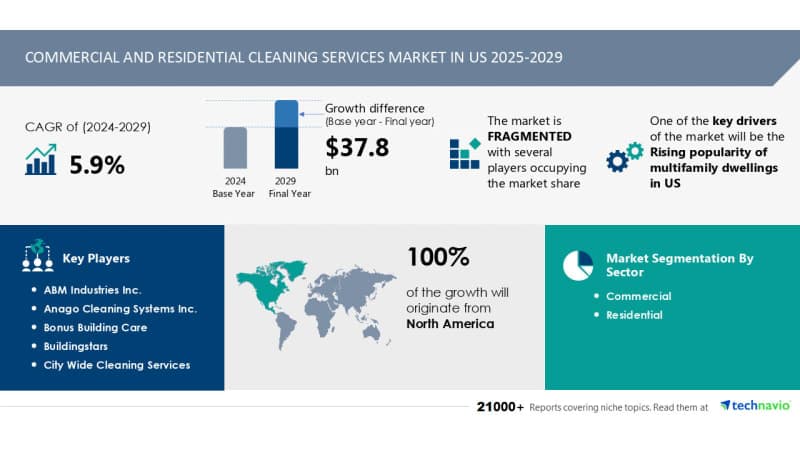
Corporate clients prioritize reliability and compliance over the absolute lowest price point. When you secure a corporate account, you establish a long-term partnership that often spans multiple years and encompasses several facility locations.
"Securing multi-year commercial agreements transfers a cleaning business from a chaotic, day-to-day hustle into an enterprise asset with measurable valuation and predictable scale." — Janitorial Industry Benchmarking Report
Furthermore, commercial accounts offer extensive opportunities for upselling high-margin specialty services. Routine janitorial maintenance opens the door to carpet extraction, strip-and-wax floor care, window washing, and post-construction cleanups.
How to Get Commercial Cleaning Contracts: A Step-by-Step Blueprint
1. Identify and Target High-Value Niches
Not all commercial properties possess the same service requirements or budgetary flexibility. To stand out, specialize in specific verticals like medical facilities, corporate office parks, educational institutions, or industrial warehouses.
Medical facilities require strict adherence to terminal cleaning protocols and biohazard safety measures. Corporate offices value minimal disruption, data security compliance, and pristine front-of-house aesthetics. Tailoring your messaging to these distinct needs instantly positions your brand as a specialized authority rather than a generic service provider.
2. Build a High-Converting Digital Presence
Modern procurement officers research service providers thoroughly online before issuing an Invitation to Bid (ITB). Your website must serve as a professional digital storefront that explicitly highlights your commercial capabilities, certifications, and safety compliance records.
Optimize your local SEO presence by claiming your Google Business Profile and aggressively gathering reviews from past commercial contacts. Publish case studies detailing how your team solved complex facility challenges, reduced absenteeism, or maintained strict regulatory standards for current clients.
3. Implement Cold Outreach and B2B Networking
Direct outreach remains one of the most effective strategies for identifying decision-makers who are dissatisfied with their current cleaning provider. Develop a highly targeted list of local facility managers using platforms like LinkedIn Sales Navigator.
Avoid generic, spammy sales pitches when executing your outreach campaign. Focus your messaging on common facility pain points, such as missed cleaning rotations, poor communication, or unreliability, and position your company as the strategic solution.
Pricing Strategies for a Winning Commercial Cleaning Contract
Accurate pricing determines whether a new contract catalyzes your business growth or drains your operational cash reserves. Commercial pricing models must account for direct labor costs, payroll taxes, supply overhead, equipment depreciation, insurance premiums, and your targeted net profit margin.
Total Bid Price = (Direct Labor Hours × Hourly Labor Rate) + Consumables Overhead + Operating Expenses + Desired Profit MarginThe most common pricing structures include flat monthly rates, per-square-foot pricing, and hourly billing rates for specialized or erratic projects. For standard janitorial contracts, a flat monthly fee based on a calculated production rate per square foot provides the greatest transparency for both parties.
Always calculate your team's production rate—the total square footage one cleaner can thoroughly service in one hour—based on the facility type. A medical facility with complex sanitization requirements features a much lower production rate than a wide-open, minimalist corporate warehouse.
The Walkthrough and Bidding Process: Turning Leads into Clients
The physical facility walkthrough represents your prime opportunity to build trust, demonstrate expertise, and gather the raw data required for an accurate proposal. Never submit a commercial bid without personally inspecting the property first.
Arrive Fully Prepared: Bring a digital camera, a laser measuring tool, a detailed facility checklist, and clipboards to document specific floor types, high-traffic areas, and high-touch surfaces.
Ask Diagnostic Questions: Inquire deeply about the client's current pain points, special event schedules, preferred cleaning windows, and specific security clearances required for your staff.
Identify Upsell Opportunities: Look for neglected areas such as exterior windows, stained carpets, or weathered hard floors that you can include as optional add-on services in your proposal.
Present a Professional Proposal Document: Deliver a comprehensive proposal package featuring an executive summary, a customized scope of work, transparent pricing tiers, proof of insurance, and relevant client references.
Essential Tools and Strategies for Cleaning Contracts
Utilizing specialized software and strategic sales assets streamlines your procurement pipeline, reduces bidding errors, and guarantees operational profitability.
Crafting Your Commercial Cleaning Contract: Key Legal and Operational Clauses
A comprehensive commercial cleaning contract protects your business from scope creep, safeguards your cash flow, and outlines clear conflict-resolution frameworks. Avoid relying on generic online templates; ensure a legal professional reviews your final documents to fit local regulations.
"A well-drafted service agreement doesn't just manage liability—it establishes clear, measurable operational boundaries that foster long-term corporate respect." — Small Business Legal Association
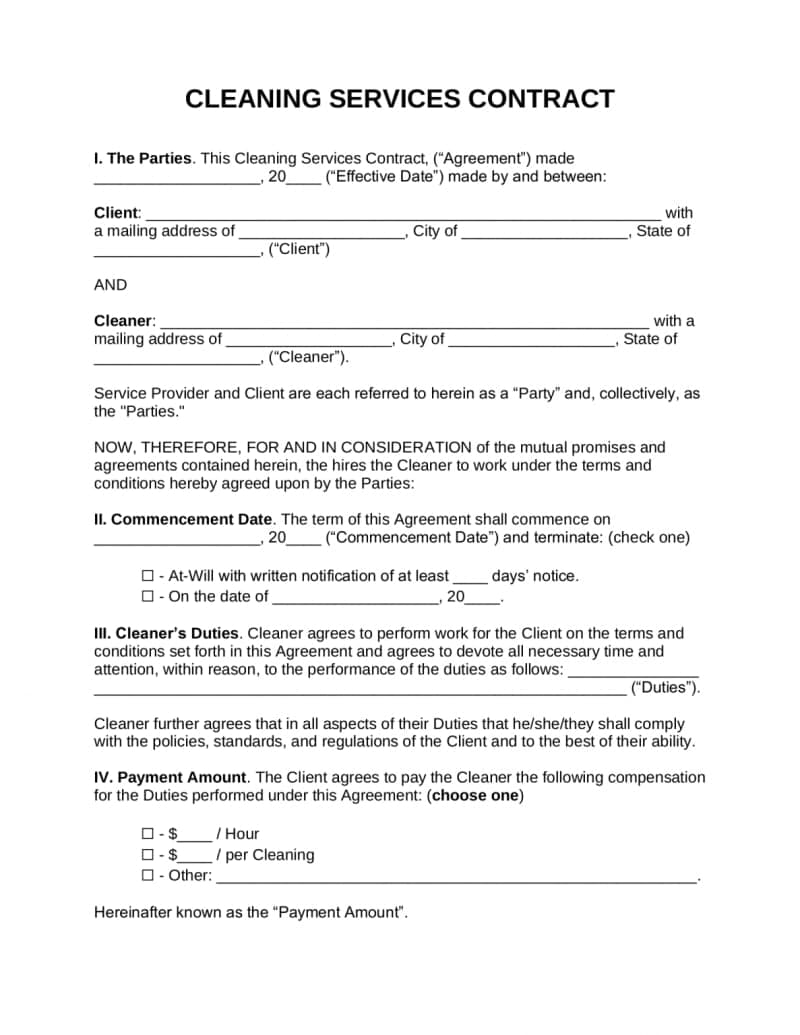
Detailed Scope of Work (SOW): Specify exactly which tasks your team will perform, their exact frequencies (daily, weekly, monthly), and precisely which areas are excluded from the agreement.
Payment Terms and Late Fees: Clearly state the monthly invoice due dates, acceptable payment methods, grace periods, and the exact interest percentages applied to overdue balances.
Termination and Cancellation Clauses: Protect your business by requiring a 30-day or 60-day written notice for contract termination, accompanied by a valid opportunity to cure any service deficiencies.
Solicitation of Employees Restrictions: Include a strict non-solicitation clause preventing clients from hiring your trained cleaning technicians directly for their in-house staff.
Conclusion
Mastering the acquisition of commercial cleaning contracts requires combining targeted marketing, meticulous pricing calculations, and structured operational execution. By positioning your janitorial brand as a compliant, highly specialized partner rather than a low-cost vendor, you can consistently win premium corporate accounts.
Commit to continuously refining your bidding systems, leveraging modern janitorial technology, and maintaining transparent communication with facility managers. Over time, these foundational strategies will transform your commercial pipeline into a highly profitable growth engine for your cleaning enterprise.
Connect With Us
Have questions? Want to learn more? Reach out to us on WhatsApp or follow us on Facebook for updates and tips.


