Mon–Fri 9am – 5pm

Menu
How to Win Commercial Cleaning Contracts: The Ultimate Guide for Janitorial Businesses
Last updated:
08 Jul 2026
Table of Contents
- Introduction: Why Winning Commercial Cleaning Contracts Is Getting Harder
- 1. Understanding the Commercial Cleaning Contract Landscape
- 2. Building Your Target List Before You Bid on Anything
- 3. Outbound Prospecting: Turning Cold Leads Into Bid Opportunities
- 4. How to Prepare a Winning Cleaning Bid
- 5. Pricing Strategy: Bidding Competitively Without Underselling Your Business
- 6. Sanitation Standards and Compliance: A Competitive Advantage
- 7. Following Up Without Being Annoying
- 8. Turning One Contract Into Sustainable Growth
- Final Thoughts: Systemize the Process, Not Just the Pitch
Introduction: Why Winning Commercial Cleaning Contracts Is Getting Harder
The janitorial industry is crowded, price-sensitive, and increasingly procurement-driven. Facility managers now run formal vendor comparisons instead of picking whoever calls first. Learning how to win commercial cleaning contracts today means combining disciplined prospecting, sharp bidding, and operational proof — not just showing up with a lower price.
This guide breaks down the entire process: finding the right buildings, getting in front of the right decision-makers, submitting bids that win without destroying your margins, and turning single contracts into a repeatable growth engine. Every section is built for owners who are done guessing and ready to build a system.
1. Understanding the Commercial Cleaning Contract Landscape
Before you write a single bid, you need to understand who buys, how they buy, and what they actually evaluate.
Commercial cleaning contracts are typically awarded by one of three buyer types:
Property/facility managers overseeing office buildings, retail centers, or medical complexes.
Procurement or operations directors at larger companies with formal RFP processes.
Building owners managing smaller, standalone commercial properties directly.
Each buyer type has a different decision timeline and a different tolerance for risk. Property managers often move fast when a current vendor underperforms, while procurement teams tend to run structured, multi-vendor evaluations that stretch over weeks or months.
Industry data point: Average B2B outbound appointment-setting conversion rates sit between 2% and 3% across most industries, which means consistent, high-volume prospecting — not one-off outreach — is what actually fills a janitorial sales pipeline.
Understanding this reality upfront reframes the entire strategy. You are not looking for a single lucky break; you are building a repeatable acquisition system that consistently surfaces qualified opportunities.
2. Building Your Target List Before You Bid on Anything
Most cleaning companies bid reactively — they wait for an RFP to land in their inbox. Companies that scale instead build proactive target lists of properties likely to need a new vendor.
Key targeting criteria to prioritize:
Lease renewal or property management turnover — new management often re-bids janitorial contracts within the first 90 days.
Square footage and vertical fit — match your crew capacity and equipment to office, medical, industrial, or retail specifications.
Contract expiration timing — most commercial cleaning agreements run 1–3 years; tracking renewal windows lets you approach buyers before an RFP is even issued.
Complaint signals — negative Google reviews mentioning "dirty lobby" or "unclean restrooms" at a business's building are strong buying triggers.
Rather than manually researching every building in your territory, many janitorial companies work from a verified list of facility managers actively reviewing vendors, which shortens the research phase dramatically and lets sales reps spend their time on conversations instead of spreadsheets.

3. Outbound Prospecting: Turning Cold Leads Into Bid Opportunities
Once you have a target list, the next challenge is getting a decision-maker to actually take your call or open your email. This is where most janitorial companies stall out — not because their cleaning quality is weak, but because their outreach process is inconsistent.
Key outbound channels for commercial cleaning contracts:
Cold calling facility and property managers directly, referencing specific building details to prove relevance.
Email sequences that lead with a specific, verifiable pain point (e.g., current vendor complaints, expiring contract).
LinkedIn outreach to office managers and operations directors, particularly effective for multi-site accounts.
Referral and subcontractor networks — building relationships with general contractors, real estate brokers, and property management firms that place vendors regularly.
Industry data point: Cold outbound calling in B2B services typically produces a 2–5% conversion rate from dial to booked meeting, with top-performing teams reaching 5–8% through better data and tighter follow-up cadences.
Because those numbers require volume to produce results, many owner-operators find it more efficient to focus on outsourcing your outbound prospecting to a dedicated team that can sustain daily call volume, rather than pulling technicians or owners away from operations to chase leads part-time.
4. How to Prepare a Winning Cleaning Bid
Once you've secured a walkthrough or RFP invitation, your bid quality determines whether you win the account or lose it to a competitor with a tighter proposal.
Core components every winning bid needs:
Accurate scope of work — square footage, frequency (nightly, weekly, floor-specific), and specialty services (floor stripping, window cleaning, disinfection).
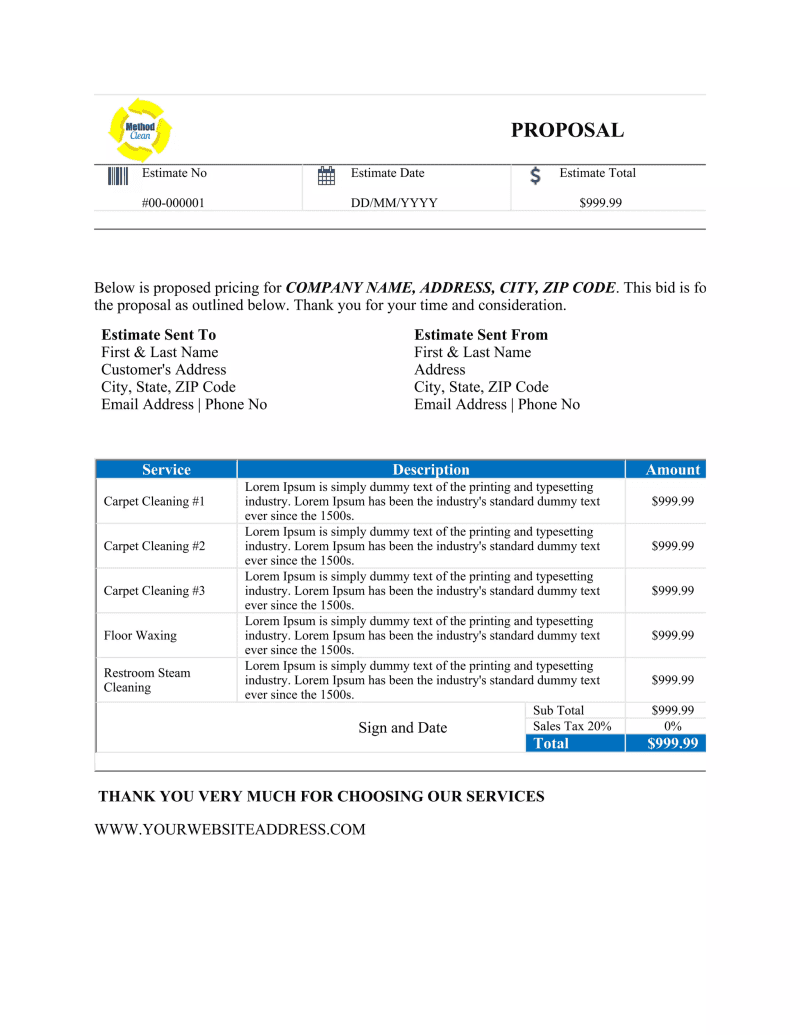
Transparent, defensible pricing — broken into labor, supplies, equipment, and margin, so the buyer understands what they're paying for.
Staffing plan — crew size, supervision structure, and backup coverage for absences.
Compliance documentation — insurance certificates, bonding, and safety training records aligned to OSHA's hazard communication standard for cleaning chemicals.
References and proof of performance — case studies or client testimonials from comparable properties.
A common mistake when learning how to bid on cleaning contracts is underpricing to win the account, only to lose money once actual labor hours and supply costs are factored in. Price to your real cost structure, then differentiate on service quality, responsiveness, and reporting — not just the bottom line.
5. Pricing Strategy: Bidding Competitively Without Underselling Your Business
Pricing is where most new janitorial bids fall apart. Buyers compare multiple cleaning bids side by side, and an unrealistically low number raises red flags just as often as it wins deals.
Pricing approaches to consider:
Cost-plus pricing — calculate labor, supplies, and overhead, then apply a consistent margin (typically 10–20% for janitorial services).
Square-footage pricing — a per-square-foot rate benchmarked against your local market and building type.
Tiered service pricing — a base nightly rate plus optional add-ons (carpet care, window washing, disinfection) priced separately.
Best practice: Always show your math. Buyers who see a clear price-per-service breakdown trust the number more than a single flat quote, and they're less likely to shop you down purely on price.
6. Sanitation Standards and Compliance: A Competitive Advantage
Post-pandemic, facility managers pay close attention to sanitation protocols — not just visible cleanliness. Referencing recognized public health standards in your proposal signals professionalism that price-focused competitors often skip.
The CDC's guidance on cleaning and disinfecting facilities distinguishes between cleaning (removing germs and dirt), sanitizing (reducing germs to safe levels), and disinfecting (killing remaining germs on surfaces), and recommends that high-touch surfaces be cleaned regularly with additional disinfection layered on for high-traffic or higher-risk environments.
Building your scope of work around this framework — and explicitly naming it in your proposal — demonstrates that your protocols aren't guesswork. It also gives you language to justify premium pricing for medical offices, gyms, and other higher-risk facility types.
7. Following Up Without Being Annoying
Very few commercial cleaning contracts are won on the first conversation. Buyers need time to compare vendors, check budgets, and coordinate internally.
Effective follow-up cadence:
Day 1–2: Thank-you note referencing specific details discussed during the walkthrough.
Day 5–7: Share a relevant case study or reference from a similar property type.
Day 14: Check in on decision timeline, offer to answer outstanding questions.
Day 30: Final follow-up before moving the lead into a longer-term nurture sequence.
Persistence works — but only when it's paired with genuinely useful information at each touch, not just a repeated "checking in" message.
8. Turning One Contract Into Sustainable Growth
Winning your first few accounts is only the beginning. The businesses that scale treat contract acquisition as an ongoing system rather than a one-time sales push.
Ask for referrals immediately after a strong first 90 days of service — satisfied facility managers often manage or know of other properties.
Upsell adjacent services like day porter staffing, floor care, or exterior maintenance to existing accounts.
Track renewal dates proactively so you're never caught off guard by a competitor's late-stage bid.
Reinvest in pipeline generation rather than pausing prospecting once you land a few wins — sales cycles for facility accounts often run 60–90+ days, so gaps in outreach create future revenue gaps.
This is exactly where building a predictable pipeline of decision-makers becomes the difference between a business that grows in unpredictable bursts and one that adds accounts steadily, quarter over quarter.
Final Thoughts: Systemize the Process, Not Just the Pitch
Learning how to win commercial cleaning contracts isn't about one clever sales trick — it's about building a repeatable system: identify the right buildings, reach the right decision-makers consistently, submit disciplined and transparent bids, and follow up with proof, not pressure. Companies that treat prospecting and bidding as an ongoing operational function — rather than a scramble every time revenue dips — are the ones that build lasting, scalable janitorial businesses.
Connect With Us
Have questions? Want to learn more? Reach out to us on WhatsApp or follow us on Facebook for updates and tips.


