Mon–Fri 9am – 5pm

Menu
Warehouse Cleaning Cost in 2026: What You'll Actually Pay Per Square Foot
Last updated:
02 Oct 2026
Table of Contents
- What Is the Average Warehouse Cleaning Cost?
- Why Warehouse Cleaning Prices Vary So Much From Facility to Facility
- One-Time Deep Clean vs. Recurring Contract Pricing
- What a Full-Scope Warehouse Cleaning Quote Actually Includes
- Core Cost Drivers Behind Every Warehouse Cleaning Estimate
- How to Use a Cleaning Estimate Calculator to Budget Accurately
- Common Mistakes Warehouse Managers Make When Comparing Quotes
- How to Choose the Right Warehouse Cleaning Provider
- FAQ
- Conclusion
Warehouse cleaning cost in 2026 typically runs $0.10 to $0.20 per square foot per month for recurring nightly service, depending on soil load, shift count, floor type, and how much of the building is actually cleanable space versus racking. A 100,000-square-foot warehouse at the $0.15 midpoint works out to roughly $15,000 per month, or $180,000 annually. That figure covers floor sweeping and scrubbing, high-dusting, trash removal, restroom and break room service, and dock-area maintenance — it does not automatically include strip-and-wax floor work, grease removal, or specialty compliance cleaning, which get quoted separately. The per-square-foot rate is a starting point, not the final answer: two identically sized warehouses can carry very different price tags depending on ceiling height, dock door count, and shift schedule.
If you manage a distribution center or storage facility, you already know the quotes you're getting don't agree with each other. One vendor says $0.09 per square foot. Another says $0.19. Neither explains why. At JanitorialAppointment.com, this is the exact confusion our appointment-setting work runs into daily — this guide breaks down where that number comes from, what drives it up or down, and how to use a cleaning estimate calculator so you're comparing real numbers instead of guesses.
What Is the Average Warehouse Cleaning Cost?
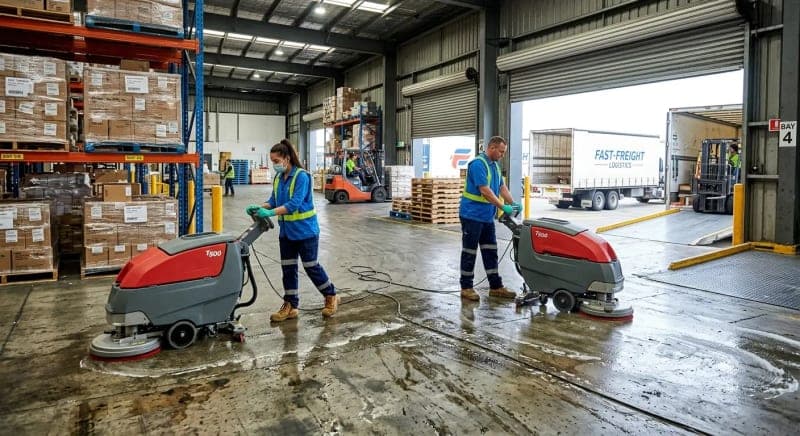
Warehouse cleaning cost is the price a facility pays, usually per square foot per month, for recurring janitorial and industrial cleaning service. For most distribution and storage facilities, that lands between $0.10 and $0.20 per square foot per month, with light industrial and manufacturing space running slightly higher as well, since soil load and compliance needs push the scope up.
Why Warehouse Cleaning Prices Vary So Much From Facility to Facility
Two buildings with identical square footage almost never cost the same to clean. A single-story distribution center with open floor plans cleans faster per square foot than a facility with mezzanines, narrow aisle racking, and multiple access-controlled zones.
Here's what actually moves the number:
Soil load — food distribution and manufacturing facilities generate more grease, dust, and debris than dry-goods storage.
Shift count — a facility running three shifts a day needs cleaning windows built around continuous operations, which adds labor complexity.
Ceiling height — high-dusting on 30- to 40-foot clear-height racking requires aerial lift equipment, not a mop and bucket.
Dock door volume — more loading docks mean more grease, tire marks, and debris tracked in daily.
Floor type — sealed concrete, epoxy coating, and unsealed slab all require different chemistry and equipment.
"Warehouse and distribution center cleaning runs $0.08 to $0.18 per square foot annually for outsourced programs, with soil load, floor complexity, shift count, and scope tier driving pricing within that range." — Millennium Facility Services, 2026 warehouse cleaning cost data
That's an annual program figure rather than a monthly rate, which is a separate pricing structure some providers use for large distribution accounts. Either way, the same variables — soil, shifts, floors, docks — are doing the real work behind the number.
One-Time Deep Clean vs. Recurring Contract Pricing
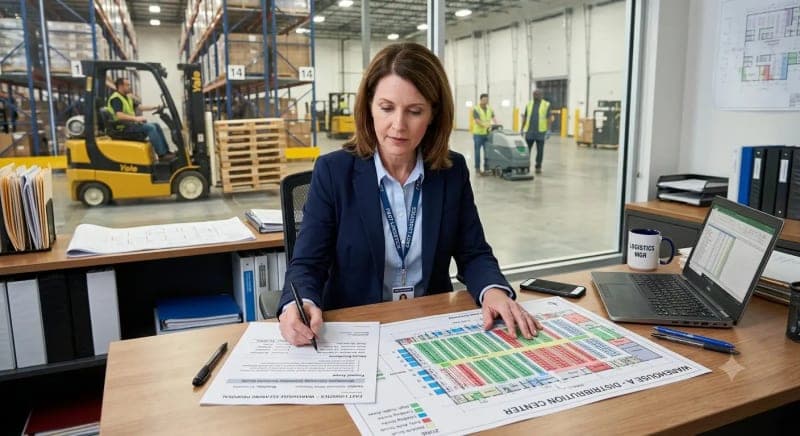
A one-time deep clean — post-construction cleanup, annual strip-and-wax, or a full facility reset before an audit — is priced by the hour or by project, not by a monthly rate, and carries a premium over recurring service since there's no standing crew relationship. A [Recurring Commercial Cleaning Contract] locks in a production rate the crew can hit consistently, which lets the provider price tighter than they would for a single unpredictable visit.
What a Full-Scope Warehouse Cleaning Quote Actually Includes
A real quote is a scope of work, not a single number. If your quote is one line item, ask for the breakdown. A complete Warehouse Deep Cleaning Services scope should specify:
Cleaning frequency (nights per week, shift alignment)
Exact tasks included (floor scrubbing, high-dust intervals, dock cleaning, restroom service)
Equipment used (auto-scrubbers, aerial lifts, degreasing chemistry)
What's excluded (strip-and-wax, carpet, specialty compliance cleaning)
Escalation terms for year two and beyond
Core Cost Drivers Behind Every Warehouse Cleaning Estimate
Labor is the single largest line item in any janitorial contract, and warehouse work is no exception. Cleaning crews are paid hourly wages that track regional labor markets, so a facility in a high-cost metro will see a higher rate than an identical building in a lower-wage region. Current wage benchmarks for janitorial and building cleaning workers are tracked publicly by the U.S. Bureau of Labor Statistics, and local labor costs typically account for well over half of a commercial cleaning contract's total price.
Beyond labor, four factors decide where your quote lands inside the $0.10–$0.20 range:
Square footage and layout — open floor plans clean faster per square foot than segmented, multi-zone buildings.
Frequency — moving from 3 nights a week to 5 doesn't scale in a straight line; labor load, restocking, and inspection frequency all shift too.
Industry type — food and beverage warehousing, cold storage, and manufacturing all carry higher soil loads than general dry-goods storage.
Flooring condition — an [Industrial Floor Cleaning & Maintenance] program on worn or unsealed concrete costs more to maintain than a properly sealed floor.
ISSA, the trade association for the cleaning and facility solutions industry, publishes rate benchmarking that most providers use as a reference point before walking a building — but a walkthrough still beats any published range, because no chart accounts for your specific dock count or ceiling height.
How to Use a Cleaning Estimate Calculator to Budget Accurately
A cleaning estimate calculator won't replace a walkthrough, but it gets you into the right ballpark before you spend time collecting proposals. Most tools work the same way:
Enter your square footage — use cleanable area, not total footprint, if racking or storage takes up a large share of the building.
Select facility type — distribution, cold storage, manufacturing, and light industrial all carry different baseline rates.
Choose cleaning frequency — 3, 5, or 7 nights a week.
Add specialty scope — dock cleaning, high-dust, strip-and-wax, or compliance-driven tasks.
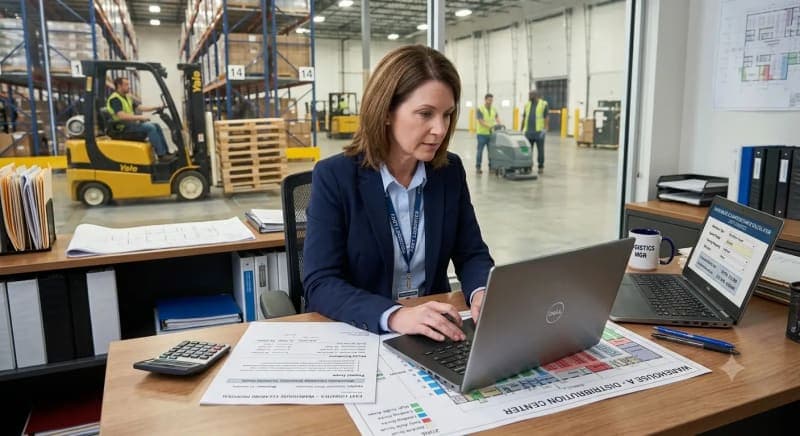
Running your numbers through a commercial cleaning calculator before requesting quotes does two things: it flags vendors quoting suspiciously below the going rate, and it gives you a defensible number to bring to budget conversations. If a proposal comes in 30% below what your commercial cleaning calculator estimated, that's a signal to ask what's being cut — not a reason to celebrate.
Common Mistakes Warehouse Managers Make When Comparing Quotes
Pricing by square footage alone. Two buildings the same size can have completely different amounts of actual cleanable surface. Walk the building before trusting a flat rate.
Cutting frequency to save money. Dropping from 5 nights to 3 often costs more later in periodic deep cleans needed to compensate for buildup.
Accepting a single monthly number with no scope attached. A legitimate quote lists tasks, frequency, and exclusions. A single number without that detail is a price, not a quote.
Ignoring escalation terms. A contract with no annual escalation clause means costs get absorbed through corner-cutting or renegotiated later from a worse position. A 3–4% annual cap is standard and protects both sides.
How to Choose the Right Warehouse Cleaning Provider
Use this checklist before signing:
Did they physically walk the building? No quote should leave a provider's office without a walkthrough of your specific facility.
Do they specialize in industrial or warehouse cleaning, not just office janitorial work? The equipment and chemistry are different.
Is the quote broken into a full scope of work, including exclusions, not just a monthly total?
Do they carry proper insurance and bonding? BSCAI maintains contractor standards worth checking before you sign a multi-year agreement.
Is there a clear escalation clause for renewal pricing?
Can they name their production rate — square feet cleaned per labor hour — for a facility like yours?
A provider who can't answer these six questions in a proposal probably hasn't walked enough buildings like yours to price it correctly.
FAQ
How much does warehouse cleaning cost per square foot?
Most warehouses pay $0.10 to $0.20 per square foot per month for recurring service, with the exact rate depending on soil load, shift count, and flooring condition.
Is warehouse cleaning cheaper than office cleaning?
Not necessarily. Warehouses often have open floor plans that clean faster per square foot, but industrial soil load, high-dusting, and dock-area maintenance can push costs above standard office rates.
How often should a warehouse be professionally cleaned?
Most distribution centers run 3 to 5 nights of cleaning per week, with high-traffic or multi-shift facilities sometimes requiring 7-night coverage.
What's included in a standard warehouse cleaning quote?
A complete quote covers floor sweeping and scrubbing, trash removal, restroom and break room service, and routine dusting. Strip-and-wax, dock degreasing, and compliance cleaning are usually quoted as add-ons.
Should I use a cleaning estimate calculator before requesting quotes?
Yes. A calculator gives you a defensible baseline number so you can spot underpriced or overpriced quotes before you commit to a walkthrough.
Why do two similar-sized warehouses get different price quotes?
Ceiling height, dock door count, shift schedules, and flooring condition all affect labor time, even when total square footage is identical.
Conclusion
Warehouse cleaning cost isn't a single number you can pull off a chart — it's a range shaped by your building's soil load, shift schedule, and floor condition. Use the $0.10–$0.20 per square foot benchmark as your starting point, run your numbers through a cleaning estimate calculator, and don't accept a quote that isn't broken into a real scope of work.
Ready to see where your facility falls in that range? Get a walkthrough-based quote before your next budget cycle so you're planning around a real number, not a guess.
Connect With Us
Have questions? Want to learn more? Reach out to us on WhatsApp or follow us on Facebook for updates and tips.


