Mon–Fri 9am – 5pm

Menu
The Ultimate Guide: How to Bid Commercial Cleaning Jobs
Last updated:
07 Jul 2026
Table of Contents
- Why Most Commercial Cleaning Bids Fail
- Step 1: Do the Site Walkthrough — Never Bid Blind
- Step 2: Calculate Your Costs Before You Calculate Your Price
- Step 3: Choose the Right Pricing Model
- Step 4: Build the Proposal Document
- Step 5: Price Competitively Without Racing to the Bottom
- Step 6: Follow Up Like It's Part of the Bid, Not an Afterthought
- Step 7: Build a Repeatable Bidding Pipeline
- Common Mistakes to Avoid When You Bid on Cleaning Jobs
- Final Thoughts: Bidding Is a Business Skill, Not a Guessing Game
Winning commercial cleaning contracts isn't about being the cheapest bidder in the stack. It's about knowing your numbers cold, presenting a proposal that reads like a business case, and following up like a professional rather than a vendor. This guide breaks down exactly how to bid commercial cleaning jobs so you protect your margins while still winning the work.
Most janitorial companies lose bids not because their service is worse, but because their bid document looks amateurish or their pricing math doesn't hold up under scrutiny. We'll fix both problems here.
Why Most Commercial Cleaning Bids Fail
Before you learn to bid on cleaning jobs correctly, it helps to understand why so many bids get rejected in the first place. Facility managers review dozens of proposals a year, and they can spot a guess versus a calculation almost instantly.
The most common failure points are:
Pricing based on gut feeling instead of square footage, frequency, and labor hours.
No walkthrough before submitting a number, leading to scope surprises later.
A proposal that lists services but never addresses the client's actual pain points.
No differentiation — the bid reads identical to every other janitorial company's template.
Zero follow-up after submission, so the bid dies quietly in an inbox.
"Nearly 80% of B2B buyers say the sales experience matters as much as the product itself when choosing a vendor." This applies directly to cleaning bids — your proposal is the sales experience before the client ever sees your crew.
Step 1: Do the Site Walkthrough — Never Bid Blind
A walkthrough isn't optional if you want an accurate, defensible bid. It's where you count restrooms, measure high-traffic zones, identify flooring types, and clock realistic cleaning times room by room.
Bring this to every walkthrough:
A measuring tool or floor plan (ask the facility manager for CAD drawings if available)
A checklist covering restrooms, break rooms, lobbies, offices, and specialty flooring
Notes on access hours, security protocols, and whether cleaning happens during or after business hours

If you're struggling to get facility managers to even schedule a walkthrough, this is often a pipeline problem, not a pricing problem. Companies using Commercial Cleaning Appointment Setting services skip weeks of cold outreach and get straight in front of decision-makers who are already evaluating vendors.
Step 2: Calculate Your Costs Before You Calculate Your Price
This is the core of learning how to bid commercial cleaning jobs profitably. Your price has to be built from real costs, not rounded to a "competitive-sounding" number.
Your cost stack should include:
Labor hours — Based on square footage and cleaning frequency (daily, 3x/week, weekly).
Labor rate — Wages plus payroll taxes, workers' comp, and any benefits.
Supplies and consumables — Paper products, chemicals, liners, restocked monthly.
Equipment — Vacuums, floor machines, amortized over their useful life.
Overhead — Insurance, management time, fuel, uniforms, software.
Profit margin — Typically 10–20% net for janitorial services, depending on contract size.
A widely used starting formula in the industry is square footage divided by a productivity rate (square feet cleaned per labor hour), which then gets multiplied by your fully loaded labor rate. Productivity rates vary by facility type — a light-traffic office cleans faster per square foot than a medical facility or a food service space.
According to ISSA's guidance on calculating cleaning times, general office space typically runs between 2,500 and 4,000 square feet cleaned per labor hour, while medical and food-service environments can drop well below that due to compliance-driven detail work and restroom fixture density.
Key strategic takeaway: if your bid doesn't separately account for restroom density, floor type, and compliance-driven tasks, you are almost certainly underpricing high-complexity facilities and overpricing simple ones — losing the easy jobs and eating losses on the hard ones.
Step 3: Choose the Right Pricing Model
Not every bid should use the same pricing structure. Matching the model to the client's expectations makes your proposal easier to approve.
Per square foot pricing — Best for straightforward office cleaning with predictable scope.
Flat monthly rate — Preferred by facility managers who want budget predictability; requires your cost math to be airtight since scope creep hurts you, not them.
Hourly rate — Best for one-off, unpredictable, or add-on work like post-construction cleanup.
Per-service or à la carte — Useful for smaller clients who only want specific tasks (window cleaning, floor stripping) without a full contract.
Most experienced operators quote a flat monthly rate for standard janitorial contracts because it signals confidence and simplifies budgeting conversations with property managers and CFOs.
Step 4: Build the Proposal Document
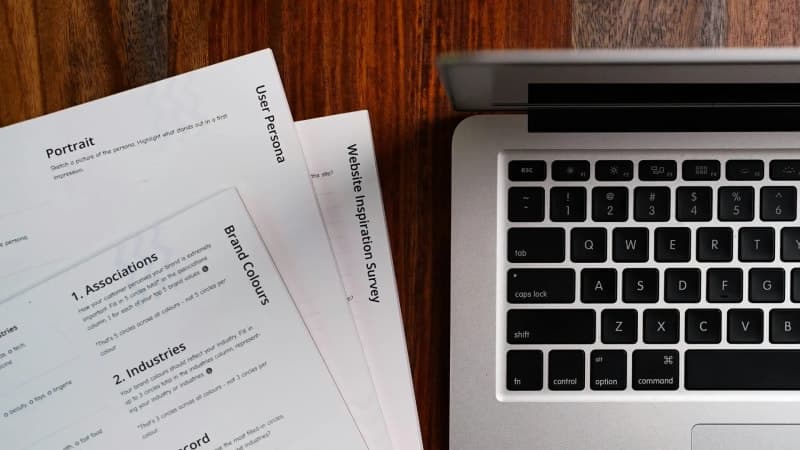
This is where most companies lose the deal even with the right price. A commercial cleaning bid example should look like a business proposal, not a price quote scribbled on letterhead.
Your proposal should include, in this order:
Cover page with client name, date, and your company branding
Executive summary addressing the client's specific facility and pain points
Detailed scope of work broken down by area and frequency
Pricing table (monthly rate, plus optional add-ons priced separately)
Compliance and safety language, including sanitation protocols
References or case studies from similar facility types
Clear next steps and a signature line
When outlining sanitation protocols, especially for medical, food service, or high-traffic facilities, referencing recognized public health guidance strengthens your credibility. Citing the CDC's guidance on when and how to clean and disinfect a facility in your scope-of-work section shows the client you're building your protocols around recognized standards, not guessing.
Commercial Cleaning Bid Example (Simplified Structure)
Facility: 20,000 sq ft general office, 3x/week service Scope: Trash removal, restroom sanitation (4 restrooms), break room cleaning, vacuuming, hard floor mopping, entryway glass cleaning Labor estimate: 3 hours per visit at fully loaded rate of $24/hour = $72 per visit Supplies/equipment allocation: $180/month Overhead + margin (18%): Applied on top of labor + supply costs Proposed monthly rate: Calculated total presented as a flat monthly fee, itemized with an optional add-on rate for periodic floor stripping and waxing
This structure — cost transparency plus a clear add-on menu — consistently outperforms single lump-sum quotes because it gives the client room to negotiate scope without you eating the difference.
Step 5: Price Competitively Without Racing to the Bottom
New owners often assume the lowest bid wins. In reality, facility managers are frequently more concerned with reliability, insurance coverage, and vendor stability than shaving a few cents per square foot.
To stay competitive without destroying your margin:
Benchmark your rates against three to five comparable local contracts before submitting.
Never quote below your fully loaded cost plus minimum margin, even to win a "foot in the door" account.
Offer tiered service packages (basic, standard, premium) so price-sensitive clients self-select without you discounting your core offer.
Key strategic takeaway: a bid that wins but loses money isn't a win — it's a 12-month liability with your company's name on it.
Step 6: Follow Up Like It's Part of the Bid, Not an Afterthought
Submitting a bid and waiting silently is one of the most common reasons proposals stall. Decision-makers are comparing multiple vendors and the squeaky wheel — professionally, not desperately — often wins the tiebreaker.
A simple follow-up cadence:
Confirmation call or email within 24 hours of submission
Check-in call 3–5 business days later to answer questions
Final follow-up around the stated decision date
B2B follow-up benchmark research shows that most B2B deals require far more persistence than reps typically give them — a large share of salespeople quit after just a few attempts, while making a few extra follow-up touches can meaningfully lift conversion. This is why many janitorial companies outsource this cadence to a dedicated team through B2B Cold Calling Services for Janitorial Companies rather than letting bids go cold.

Step 7: Build a Repeatable Bidding Pipeline
One-off bidding is exhausting and inconsistent. The operators who scale treat bidding as a system, not a scramble every time a lead shows up.
A repeatable pipeline includes:
A standing list of qualified prospects instead of reactive, one-at-a-time outreach
A templated (but customizable) proposal document your team can turn around in hours, not days
A tracked follow-up cadence built into your CRM or scheduling tool
A quarterly review of win/loss rates by facility type to refine your pricing formula
If your pipeline is inconsistent, the problem usually sits upstream of the bid itself. Businesses using Janitorial Lead Generation Lead Lists maintain a steady flow of vetted facility managers actively evaluating vendors, which means your bidding formula gets tested against real opportunities every week instead of sitting idle between referrals.
Common Mistakes to Avoid When You Bid on Cleaning Jobs
Skipping the walkthrough to save time — this is the single biggest cause of scope disputes later.
Copy-pasting the same proposal for every prospect without addressing their specific facility.
Underestimating restroom-heavy or medical facilities, where compliance work adds significant labor hours.
Failing to itemize add-ons, which makes negotiations feel like a discount request instead of a scope discussion.
No consistent follow-up system, leaving strong bids to die in an inbox.
Final Thoughts: Bidding Is a Business Skill, Not a Guessing Game
Learning how to bid commercial cleaning jobs correctly is less about clever pricing tricks and more about disciplined cost accounting, professional presentation, and consistent follow-through. Get the walkthrough right, get the math right, and present it like a business case — the win rate follows naturally.
The companies that scale fastest in this industry treat every bid as a repeatable process, not a one-off event, and they build the pipeline, proposal, and follow-up cadence to match.
Connect With Us
Have questions? Want to learn more? Reach out to us on WhatsApp or follow us on Facebook for updates and tips.


