Mon–Fri 9am – 5pm

Menu
How to Get Janitorial Contracts: A System That Actually Books Appointments
Last updated:
25 Aug 2026
Table of Contents
- What Is Appointment Setting for Cleaning Companies?
- Why Are Janitorial Businesses Struggling to Generate Commercial Cleaning Leads?
- How Does Professional Appointment Setting Improve Your Odds of Winning Janitorial Contracts?
- Is DIY Cold Calling Cheaper Than Outsourced Appointment Setting?
- What Does a Qualified Appointment Actually Look Like?
- What Are the Core Components of a High-Converting Janitorial Lead Generation System?
- How Do You Measure ROI on Appointment Setting for Janitorial Contracts?
- What Mistakes Do Cleaning Companies Make When Buying Leads or Appointments?
- How to Choose the Right Appointment Setting Partner
- FAQ
- Getting Janitorial Contracts Is a System, Not a Sprint
Quick Answer: Getting janitorial contracts consistently comes down to three things working together: a steady flow of qualified janitorial leads, outreach that reaches facility managers before they issue a formal RFP, and a sales process built around walkthroughs instead of cold quotes. Companies that rely only on referrals or bid boards win contracts sporadically. Companies that pair targeted outreach with structured appointment setting convert commercial cleaning leads into signed commercial cleaning contracts on a predictable schedule. The fastest path is combining direct outreach to facility and property managers with a qualification process that filters weak inquiries before they ever reach a proposal.
What Is Appointment Setting for Cleaning Companies?
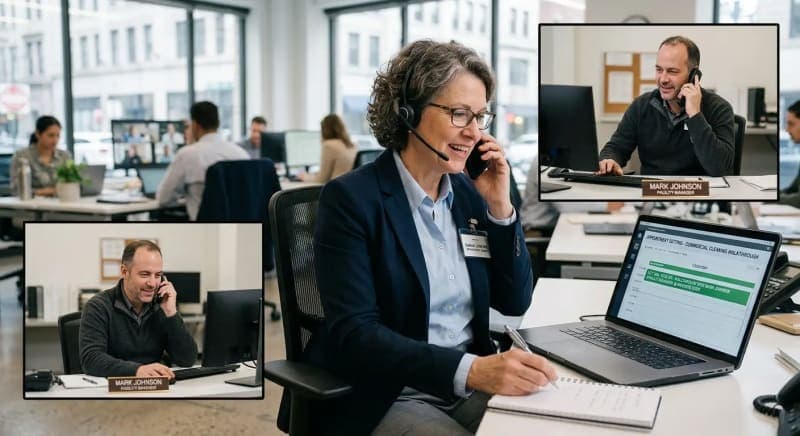
Appointment setting is the process of contacting facility managers, property managers, and procurement contacts directly, then scheduling a walkthrough or proposal meeting with a real decision-maker. It sits between marketing and sales. Marketing generates awareness; appointment setting turns that awareness into a calendar invite.
For janitorial businesses, this usually means outbound calls, targeted email sequences, and LinkedIn outreach aimed at buildings with an upcoming contract renewal or a known service complaint. The goal is never just a conversation — it's a booked walkthrough with someone who can actually sign a contract. This is the core service behind commercial cleaning appointment setting: turning outbound activity into a calendar of qualified walkthroughs.
Why Are Janitorial Businesses Struggling to Generate Commercial Cleaning Leads?
Most janitorial businesses were built by operators, not sales teams. Owners are excellent at cleaning buildings and terrible at building a repeatable pipeline. That gap shows up in three common patterns.
Referral dependence. Referrals are high-quality but unpredictable — there's no way to forecast next quarter's revenue from word of mouth alone.
Bid-board fatigue. Public RFP boards attract every competitor in the region, which pushes pricing down and margins with it.
No outbound motion. Many owners have never made a cold call to a facility manager, so the entire top of the funnel depends on inbound demand they don't control.
"The U.S. commercial cleaning services market is valued at roughly $90 billion, with industry analysts projecting continued mid-single-digit annual growth through the end of the decade." — market sizing compiled by GreenPoint Maintenance Services from IBISWorld and Grand View Research data
That growth means more buildings changing vendors every year — but only for companies that show up in front of the right buyer at the right moment.
How Does Professional Appointment Setting Improve Your Odds of Winning Janitorial Contracts?
Professional appointment setting replaces guesswork with a repeatable cadence: identify target buildings, reach the actual decision-maker, and book a walkthrough before the building ever posts a public RFP. Reaching a facility manager during the 60–90 days before their contract renews is the highest-leverage moment in the entire sales cycle, because that's when dissatisfaction with the current vendor is freshest.
Is DIY Cold Calling Cheaper Than Outsourced Appointment Setting?
On paper, yes — a phone and a spreadsheet cost nothing. In practice, DIY cold calling is usually more expensive once you account for the owner's or sales rep's time, the lack of a tested script, and the absence of a follow-up system. Most in-house attempts stall after a few weeks because there's no dedicated person tracking callbacks, objections, and re-engagement timing. Outsourced appointment setting isn't about lower hourly cost — it's about consistency the business can't otherwise sustain.
What Does a Qualified Appointment Actually Look Like?
Not every scheduled call is a qualified appointment. A qualified appointment meets a specific bar before it lands on a sales calendar.
The contact is the actual decision-maker or has direct influence over the vendor decision.
The facility fits the target profile — square footage, frequency, and facility type match the company's ideal client.
There is a stated reason to switch: contract renewal window, service complaint, or expansion.
A specific meeting time is confirmed, not just interest expressed.
What Are the Core Components of a High-Converting Janitorial Lead Generation System?
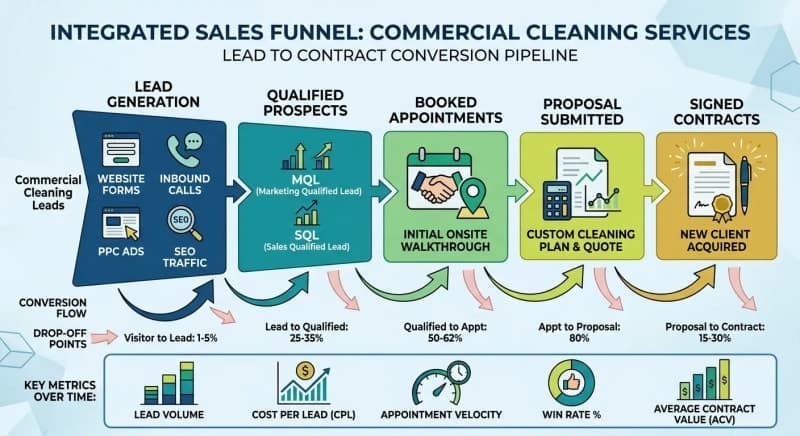
A system that consistently produces janitorial leads worth pursuing has four moving parts, and none of them work well in isolation.
Target list building. Segmenting buildings by facility type, square footage, and estimated contract value, rather than mass-blasting every business in a metro area.
Multi-channel outreach. Combining phone, email, and LinkedIn so a facility manager who ignores one channel still gets reached through another.
Qualification scripting. A structured set of questions that separates real buying intent from a polite "send me info."
CRM-tracked follow-up. Renewal windows are known dates — a system that resurfaces a lead 60 days before contract expiration outperforms one that only reacts to inbound interest.
Companies that skip the qualification step end up with a calendar full of appointments and a proposal-to-close rate near zero. Volume without qualification is the single biggest reason appointment setting programs get abandoned after one bad quarter. A structured janitorial lead generation process is what keeps that qualification step consistent instead of dependent on whoever happens to answer the phone that day.
How Do You Measure ROI on Appointment Setting for Janitorial Contracts?
ROI on appointment setting is measured across the full funnel, not just the number of calls made. Track cost per qualified appointment, appointment-to-proposal rate, proposal-to-close rate, and average contract value. A program that books 15 qualified appointments a month at a 20% close rate and an average contract value of $3,500 per month produces roughly $10,500 in new monthly recurring revenue — a return that compounds every month the contract stays active, since janitorial contracts are typically 12- to 36-month recurring agreements rather than one-time sales.
What Mistakes Do Cleaning Companies Make When Buying Leads or Appointments?
The most common mistake is confusing a lead with a commercial cleaning contract in progress. A raw lead — a name and a phone number — is worth very little without qualification. Other frequent mistakes include:
Buying shared leads that five other cleaning companies are also calling.
Skipping the walkthrough and quoting price over email or phone.
Treating every appointment the same, regardless of facility size or contract value.
No system for tracking which facilities are approaching a renewal date.
"Facility managers evaluate vendors on reliability, insurance, staffing stability, and references — not just price — which is why a rushed, quote-only sales process consistently loses to a competitor who scheduled an actual walkthrough." — vendor-selection research from Millennium Facility Services
How to Choose the Right Appointment Setting Partner
Use this checklist before signing with any lead generation or appointment setting vendor:
Ask how leads are qualified, not just how many are delivered per month.
Confirm exclusivity — leads and appointments should not be resold to competitors in the same market.
Review sample scripts and past call recordings for tone and compliance with cold-calling regulations.
Check reporting cadence — weekly pipeline visibility, not a black-box monthly summary.
Ask about renewal-window targeting specifically, since this is where the highest-intent commercial cleaning leads originate.
Start with a pilot market before rolling out nationally, so the process and messaging can be refined on real feedback.
For companies that don't have an in-house sales team ready to run this process, B2B cleaning sales outsourcing covers outreach, qualification, and appointment setting as one managed function rather than three separate hires.
FAQ
How do I get janitorial contracts as a new cleaning company?
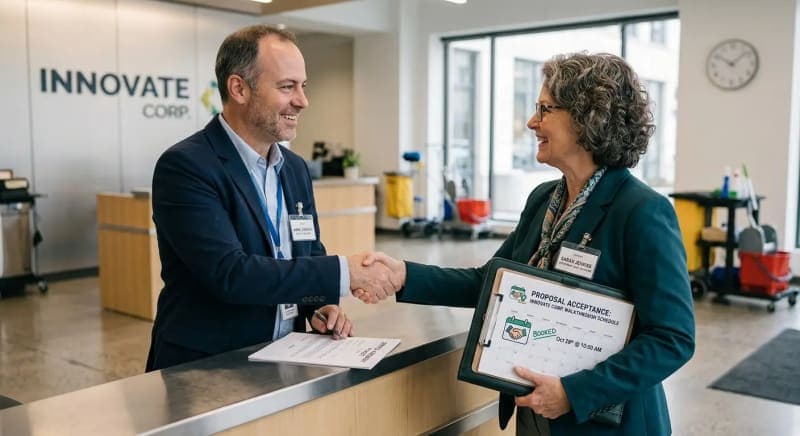
Start with a narrow target list — one facility type and one metro area — then combine direct outreach with a fast, professional walkthrough process. New companies win faster by out-executing larger competitors on responsiveness rather than trying to compete on price alone.
What is appointment setting for cleaning companies?
It's the outbound process of contacting facility decision-makers directly and scheduling a walkthrough or proposal meeting, rather than waiting for inbound requests or public bid postings.
Is outsourced lead generation worth it for janitorial businesses?
It's worth it once a company has the sales capacity to actually work the appointments it receives. Outsourcing solves the top-of-funnel problem, but the company still needs a process for walkthroughs, proposals, and follow-up.
How much does appointment setting cost for a cleaning company?
Pricing models vary — flat monthly retainers, per-appointment fees, or hybrid structures are all common. The right model depends on target contract size and the volume of appointments a sales team can realistically handle.
How long does it take to win a janitorial contract?
Most B2B cleaning sales cycles run 30–90 days from first contact to signed contract, though renewal-window timing can compress that significantly when a facility manager is already actively evaluating vendors.
What should I look for in an appointment setting partner?
Look for clear qualification criteria, exclusivity, transparent reporting, and specific targeting of contract renewal windows rather than generic cold outreach.
Getting Janitorial Contracts Is a System, Not a Sprint
Winning consistent commercial cleaning contracts isn't about one great pitch or one lucky referral. It's about building a repeatable system that puts the business in front of the right facility manager at the right moment in their renewal cycle. That's exactly the gap Janitorial Appointment was built to close — combining targeted outreach, qualified appointment setting, and renewal-window tracking so cleaning companies spend their time running walkthroughs and writing proposals, not chasing cold leads that go nowhere.
Connect With Us
Have questions? Want to learn more? Reach out to us on WhatsApp or follow us on Facebook for updates and tips.


